class: bottom, left, title-slide .title[ # Unveiling the Black Box ] .subtitle[ ## Researching Algorithms with Audit Studies ] .author[ ### <b>Fabio Votta</b> <i>(University of Amsterdam)</i> ] .date[ ### <svg viewBox="0 0 512 512" style="height:1em;position:relative;display:inline-block;top:.1em;fill:black;" xmlns="http://www.w3.org/2000/svg"> <path d="M326.612 185.391c59.747 59.809 58.927 155.698.36 214.59-.11.12-.24.25-.36.37l-67.2 67.2c-59.27 59.27-155.699 59.262-214.96 0-59.27-59.26-59.27-155.7 0-214.96l37.106-37.106c9.84-9.84 26.786-3.3 27.294 10.606.648 17.722 3.826 35.527 9.69 52.721 1.986 5.822.567 12.262-3.783 16.612l-13.087 13.087c-28.026 28.026-28.905 73.66-1.155 101.96 28.024 28.579 74.086 28.749 102.325.51l67.2-67.19c28.191-28.191 28.073-73.757 0-101.83-3.701-3.694-7.429-6.564-10.341-8.569a16.037 16.037 0 0 1-6.947-12.606c-.396-10.567 3.348-21.456 11.698-29.806l21.054-21.055c5.521-5.521 14.182-6.199 20.584-1.731a152.482 152.482 0 0 1 20.522 17.197zM467.547 44.449c-59.261-59.262-155.69-59.27-214.96 0l-67.2 67.2c-.12.12-.25.25-.36.37-58.566 58.892-59.387 154.781.36 214.59a152.454 152.454 0 0 0 20.521 17.196c6.402 4.468 15.064 3.789 20.584-1.731l21.054-21.055c8.35-8.35 12.094-19.239 11.698-29.806a16.037 16.037 0 0 0-6.947-12.606c-2.912-2.005-6.64-4.875-10.341-8.569-28.073-28.073-28.191-73.639 0-101.83l67.2-67.19c28.239-28.239 74.3-28.069 102.325.51 27.75 28.3 26.872 73.934-1.155 101.96l-13.087 13.087c-4.35 4.35-5.769 10.79-3.783 16.612 5.864 17.194 9.042 34.999 9.69 52.721.509 13.906 17.454 20.446 27.294 10.606l37.106-37.106c59.271-59.259 59.271-155.699.001-214.959z"></path></svg> favstats.github.io/nefca2023 (Slides) <br> <svg viewBox="0 0 512 512" style="height:1em;position:relative;display:inline-block;top:.1em;fill:blue;" xmlns="http://www.w3.org/2000/svg"> <path d="M459.37 151.716c.325 4.548.325 9.097.325 13.645 0 138.72-105.583 298.558-298.558 298.558-59.452 0-114.68-17.219-161.137-47.106 8.447.974 16.568 1.299 25.34 1.299 49.055 0 94.213-16.568 130.274-44.832-46.132-.975-84.792-31.188-98.112-72.772 6.498.974 12.995 1.624 19.818 1.624 9.421 0 18.843-1.3 27.614-3.573-48.081-9.747-84.143-51.98-84.143-102.985v-1.299c13.969 7.797 30.214 12.67 47.431 13.319-28.264-18.843-46.781-51.005-46.781-87.391 0-19.492 5.197-37.36 14.294-52.954 51.655 63.675 129.3 105.258 216.365 109.807-1.624-7.797-2.599-15.918-2.599-24.04 0-57.828 46.782-104.934 104.934-104.934 30.213 0 57.502 12.67 76.67 33.137 23.715-4.548 46.456-13.32 66.599-25.34-7.798 24.366-24.366 44.833-46.132 57.827 21.117-2.273 41.584-8.122 60.426-16.243-14.292 20.791-32.161 39.308-52.628 54.253z"></path></svg> favstats <br> <svg viewBox="0 0 448 512" style="height:1em;position:relative;display:inline-block;top:.1em;fill:#615ff7;" xmlns="http://www.w3.org/2000/svg"> <path d="M433 179.11c0-97.2-63.71-125.7-63.71-125.7-62.52-28.7-228.56-28.4-290.48 0 0 0-63.72 28.5-63.72 125.7 0 115.7-6.6 259.4 105.63 289.1 40.51 10.7 75.32 13 103.33 11.4 50.81-2.8 79.32-18.1 79.32-18.1l-1.7-36.9s-36.31 11.4-77.12 10.1c-40.41-1.4-83-4.4-89.63-54a102.54 102.54 0 0 1-.9-13.9c85.63 20.9 158.65 9.1 178.75 6.7 56.12-6.7 105-41.3 111.23-72.9 9.8-49.8 9-121.5 9-121.5zm-75.12 125.2h-46.63v-114.2c0-49.7-64-51.6-64 6.9v62.5h-46.33V197c0-58.5-64-56.6-64-6.9v114.2H90.19c0-122.1-5.2-147.9 18.41-175 25.9-28.9 79.82-30.8 103.83 6.1l11.6 19.5 11.6-19.5c24.11-37.1 78.12-34.8 103.83-6.1 23.71 27.3 18.4 53 18.4 175z"></path></svg> <a href="mailto:favstats@fosstodon.org" class="email">favstats@fosstodon.org</a> <br> <svg viewBox="0 0 448 512" style="height:1em;position:relative;display:inline-block;top:.1em;fill:#0085ff;" xmlns="http://www.w3.org/2000/svg"> <path d="M400 32H48C21.5 32 0 53.5 0 80v352c0 26.5 21.5 48 48 48h352c26.5 0 48-21.5 48-48V80c0-26.5-21.5-48-48-48z"></path></svg> favstats April 8 2024 - AlgoSoc YSN Spring School ] --- layout: true <div class="logo"></div> --- class: white ## What is an algorithm audit study? <center> .font150["an <b>.gold[empirical study]</b> investigating a <b>.darkblue[public]</b> <b>.orange[algorithmic system]</b> for potential <b>.purple[problematic behavior]</b>" (Bandy 2021)] </center> -- + <b>.gold[empirical study]</b> + includes an experiment or analysis (quantitative or qualitative) -- + <b>.darkblue[public]</b> (optional?) + used in a commercial context or other public setting such as law enforcement, education, criminal justice, or public transportation -- + <b>.orange[algorithmic system]</b> + socio-technical system influenced by at least one algorithm -- + <b>.purple[problematic behavior]</b> + discrimination, distortion, exploitation, or misjudgement. + A behavior is problematic when it *causes harm* (or potential harm) --- class: white ## How to conduct an algorithm audit study? .font50[(Bandy 2021; Urman et al. 2024)] -- .pull-left[ + <b>Code audit</b> + researchers obtain and analyze the code that makes up the algorithm + *rarely available* > Weber & Kosterich 2018: "Investigates code of 59 open source mobile news apps" + "Much of the code that automates news distribution is created separately from the journalism world." ] .pull-right[  ] --- class: white ## How to conduct an algorithm audit study? .font50[(Bandy 2021; Urman et al. 2024)] .pull-left[ + Code audit + <b>direct/non-personalized scraping</b> + using APIs / webscraping + *limited usefulness because results are not personalized* > *"Foreign beauties want to meet you": The sexualization of women in Google’s organic and sponsored text search results* Urman & Makhortykh (2023) + "We find evidence of the sexualization of women, particularly those from the Global South and East, in search outputs in both organic and sponsored search results." ] .pull-right[  ] --- class: white ## How to conduct an algorithm audit study? .font50[(Bandy 2021; Urman et al. 2024)] .pull-left[ + Code audit + direct/non-personalized scraping + <b>Sock puppet/personalized scraping</b> + creating accounts/entities that receive personalized recommendations + *carrier puppets/repurposing*: impersonated users affect the real-world system and may "carry" effects onto end users + research has (in-)direct effects on algorithmic system > Hagar & Diakopoulos (2023) + "We find almost no evidence of proactive news exposure on TikTok’s behalf." ] .pull-right[  ] --- class: white ## How to conduct an algorithm audit study? .font50[(Bandy 2021; Urman et al. 2024)] .pull-left[ + Code audit + direct/non-personalized scraping + Sock puppet/personalized scraping + <b>Crowdsourcing</b> + researchers collect data by hiring end users to test the algorithm > Glaesener (2022) Exploring Siri’s Content Diversity Using a Crowdsourced Audit. + "A diverse sample of 170 US-based Siri users between the ages of 18-64 performed five identical queries about politically controversial issues. Forty-two percent of the participants received the six most frequent answers, while 22% of the users received unique answers." ] .pull-right[  ] --- class: white, middle, center # The Role of Algorithms # in Digital Political Advertising  *studying ad delivery algorithms by "expert"sourcing* --- ### The Role of Algorithms in Digital Political Advertising .pull-left[ <img src="img/cambridge_analytica.png" width="100%"> *The explicit assumption here that advertisers typically have strong control over who sees which ad* ] -- .pull-right[ **But there is more than *just* targeting criteria that decides who sees political ads:** + advertisers can set targeting *boundaries* + *ad delivery algorithms* "decide" which individual users get ads from which advertiser + they do this by organizing *automated ad auctions* which set prices ] --- ### Who decides who sees which ad on Meta? + **Ad auctions** = an auction takes place that determines which ad by whom is shown <center> <img src="img/fb-ad-bidding.png" width="65%" height="65%"> </center> --- ### Who decides who sees which ad on Meta? + **Relevance** = how relevant is the ad to the user <img src="img/relevant_quote.png" width="70%" /> [(Meta Business Help Center, 2022)](https://www.facebook.com/business/help/430291176997542) --- ### Who decides who sees which ad on Meta? + **Ad auctions** = an auction takes place that determines which ad by whom is shown: based on *budget* + **Relevance** = how relevant is the ad to the user <center> <img src="img/fb-ad-bidding2.png" width="65%" height="65%"> </center> --- ### A (silly) example .pull-left[ <img src="https://images-na.ssl-images-amazon.com/images/S/compressed.photo.goodreads.com/books/1465341854i/12111823.jpg" width = "60%"> ] -- .pull-right[  F. Snow, obsessed with A Song of Ice and Fire book series ] --- class: white ### Prior Research (Ali et al., 2020,2021) .pull-left[ 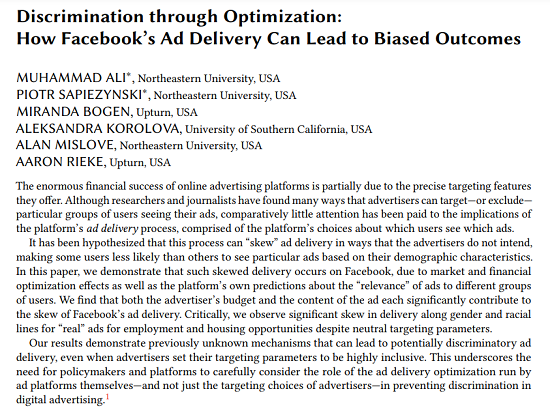 ] .pull-right[ <img src="img/ali2.png" width="90%"> ] --- ### Prior Research (Ali et al., 2020,2021) When targeting the same audience, at the same time, with the same budget: + Ad delivery is heavily skewed along gendered and racial stereotypes + even without the intent of the advertiser [(Ali et al. 2020)](https://dl.acm.org/doi/10.1145/3359301) -- .pull-left[ **Delivery remains skewed even with blank image** Images invisible to humans but still detectable by algorithm: + yield **similar skews** in delivery + highlights importance of algorithm + less based on differences in user behavior/preferences ] .pull-right[ 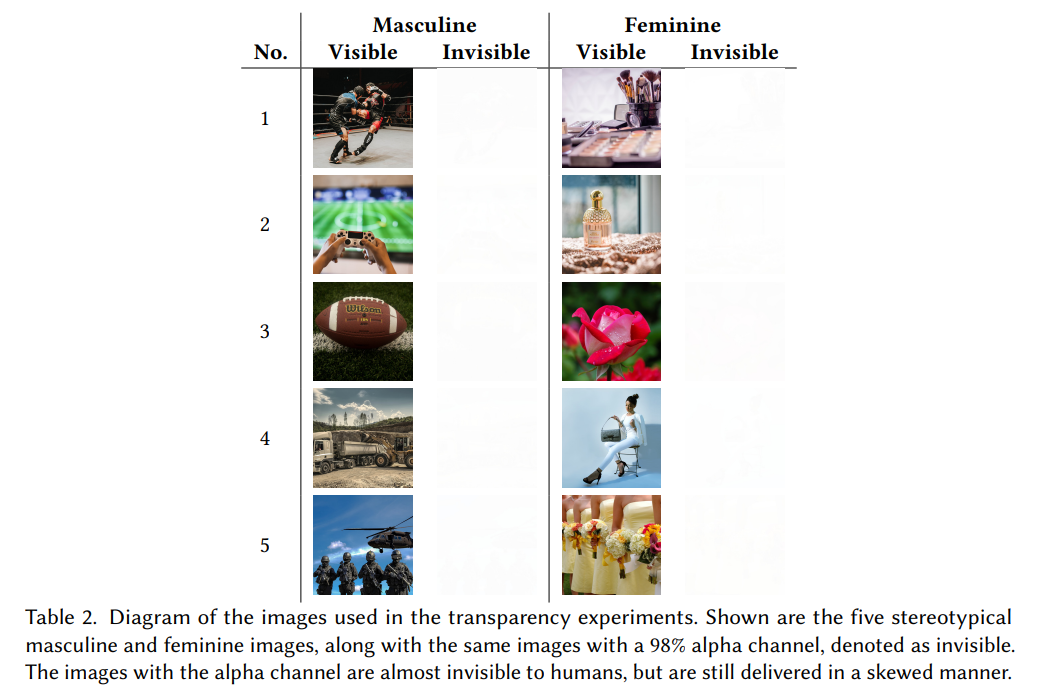 ] --- ### Prior Research (Ali et al., 2020,2021) When targeting the same audience, at the same time, with the same budget: Regarding political ads [(Ali et al., 2021)](https://dl.acm.org/doi/pdf/10.1145/3437963.3441801): -- .pull-left[ + **Skewed delivery** + Political ads more often delivered to ideologically congruent audience + Bernie ads → higher % D; + Trump ads → higher % R + **Increased cost** + Liberal ad to a liberal audience: *21 Dollar per 1000 users*; + Conservative ad delivered to liberal audience: *40 Dollar per 1000 users*. ] -- .pull-right[ **Results hold** + when tricking Facebook into classifying non-partisan ads as partisan <img src="img/ali4.png" width="40%"> ] --- class: center, middle ## Research Question ### How does the Meta ad delivery algorithm<br>influence the pricing & distribution of political ads<br>in the Netherlands? --- class: center, middle # Research Design --- ### Research Design + Algorithm audit study + Place the same ads targeting the same audiences (9 different ones) -- + Collaborate with Dutch parties to place political ads + Final collaboration with 3: 1. GroenLinks (Green party) 2. VVD (centre-right party of PM Rutte) 3. PvdA (social democrats) --- ### Hypotheses  [(Meta Business Help Center, 2022)](https://www.facebook.com/business/help/430291176997542) > **H1:** **The more relevant** an audience is for an ad, **the cheaper is the cost** for reaching 1000 users in that audience. -- We expect that ads by party with a greater share of supporters are less expensive (H2) > **H2:** Parties with a greater share of supporters pay less for reaching 1000 users. --- class: center, middle # Ad Creative and Setup --- ## How the ad looked like on Desktop <img src="img/example_pvda.png" style="float: left; width: 37%; margin-right: 1%; margin-bottom: 0.5em;"> <img src="img/example_gl.png" style="float: left; width: 37%; margin-right: 1%; margin-bottom: 0.5em;"> <p style="clear: both;"> --- ## How the ad looked like on Desktop <img src="img/example_vvd.png" style="float: left; width: 37%; margin-right: 1%; margin-bottom: 0.5em;"> --- class: center, middle ## Results --- class: center, white, middle ### Between-party differences `\(\rightarrow\)` we consistently find one party that pays less and reaches more people --- class: white #### Between-party differences (per individual ad) .font80[PvdA pays the least (**10-12 cents less** or: 9-11%) & reaches more people (~**1.1 - 1.3k more** per ad)] .pull-left[ <img src="index_files/figure-html/unnamed-chunk-2-1.png" width="504" /> ``` ## # A tibble: 15 × 5 ## party reach share targeting relevance ## <chr> <dbl> <dbl> <chr> <dbl> ## 1 PvdA 13138 52.1 Higher Education 1 ## 2 PvdA 12917 51.7 Higher Education 1 ## 3 GroenLinks 11938 51.7 Higher Education 2 ## 4 VVD 11528 51.6 Higher Education 1 ## 5 VVD 11845 51.6 Higher Education 1 ## 6 GroenLinks 11622 51.6 Higher Education 2 ## 7 PvdA 12860 51.6 Higher Education 1 ## 8 GroenLinks 11727 51.4 Higher Education 2 ## 9 PvdA 12729 51.1 Higher Education 1 ## 10 GroenLinks 11486 51.1 Higher Education 2 ## 11 VVD 11388 51.0 Higher Education 1 ## 12 PvdA 12632 50.9 Higher Education 1 ## 13 GroenLinks 11509 50.9 Higher Education 2 ## 14 VVD 11344 50.8 Higher Education 1 ## 15 VVD 11260 50.6 Higher Education 1 ``` ] -- .pull-right[ <img src="index_files/figure-html/unnamed-chunk-3-1.png" width="504" /> ] --- class: white #### Between-party differences (per target audience) -- <!-- 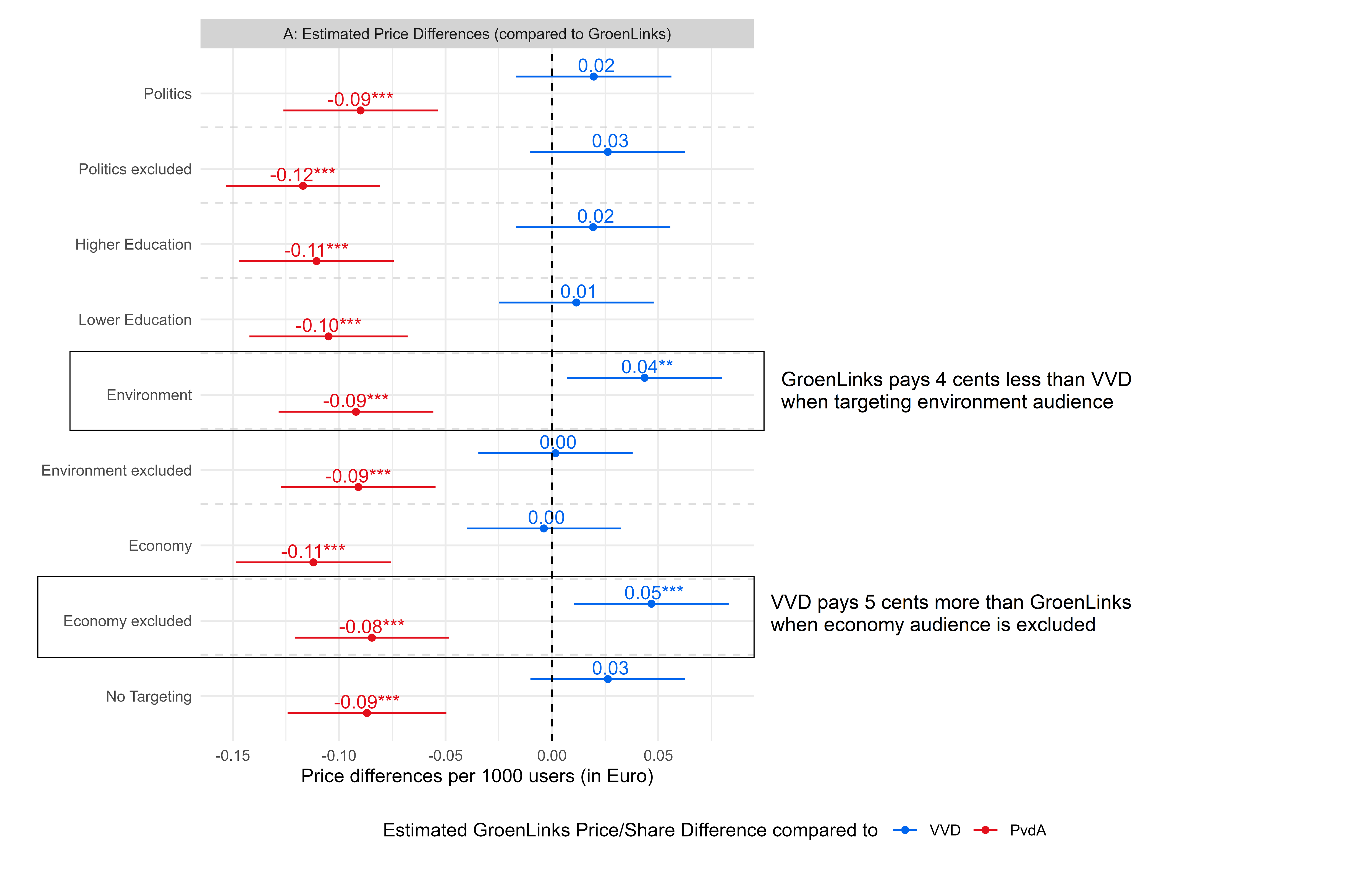 --> <img src="img/diffs_single1.png" width="85%" height="85%"> --- class: center, white, middle ### Within-party differences --- class: white ### Within-party differences - Price per 1k .pull-left[ Ads **cost less for**: + *higher-educated* vs. *lower-educated audience* Ad price **does not statistically differ for**: + Audience *interested in the economy* vs. *not interested* + Audience *interested in politics* vs. *not interested* Ads **cost more for**: + Audience *interested in the environment* vs. *not interested* ] .pull-right[ 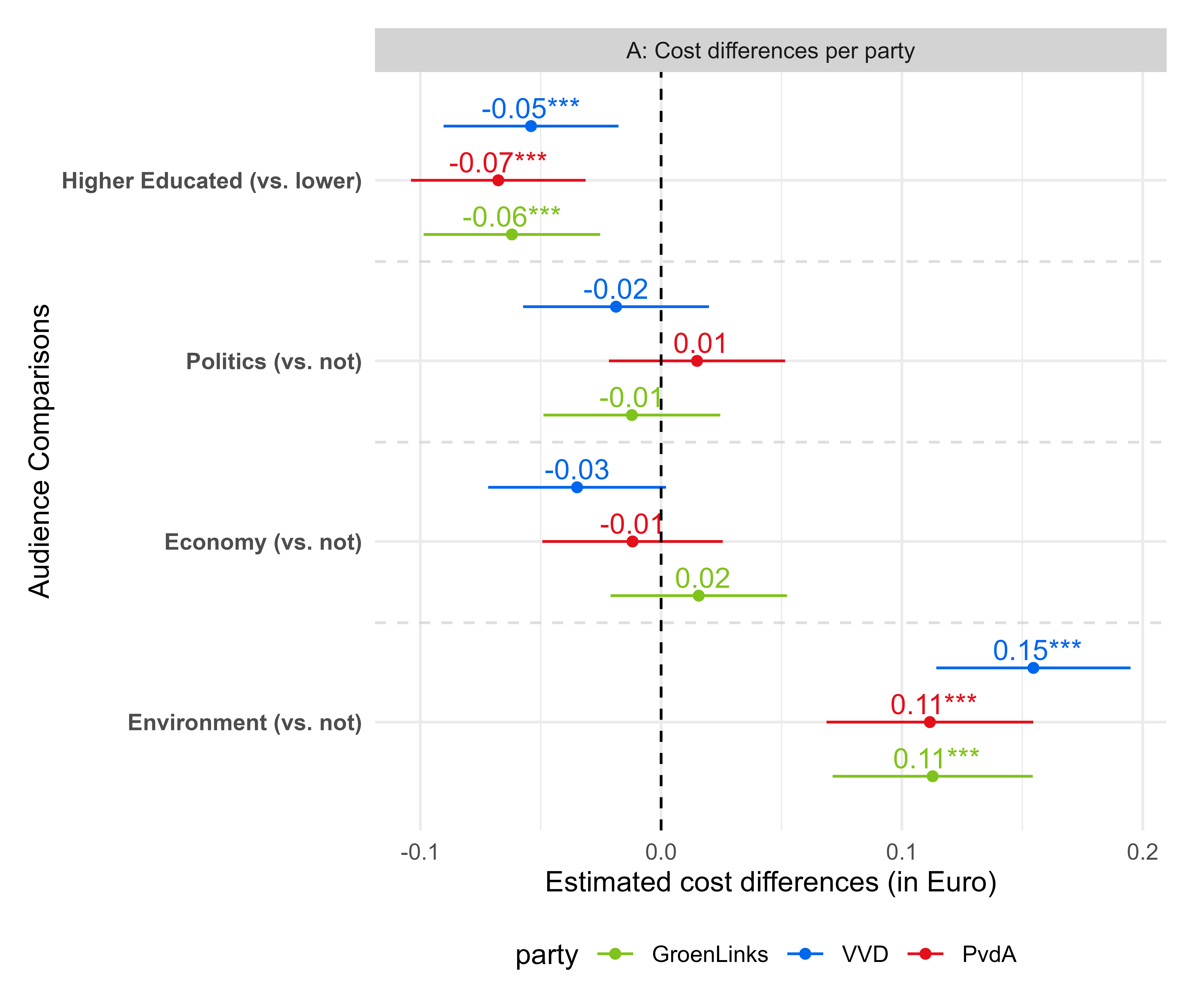 ] --- class: white, middle center **18-24 year olds and women are reached less (and cost more to reach)** 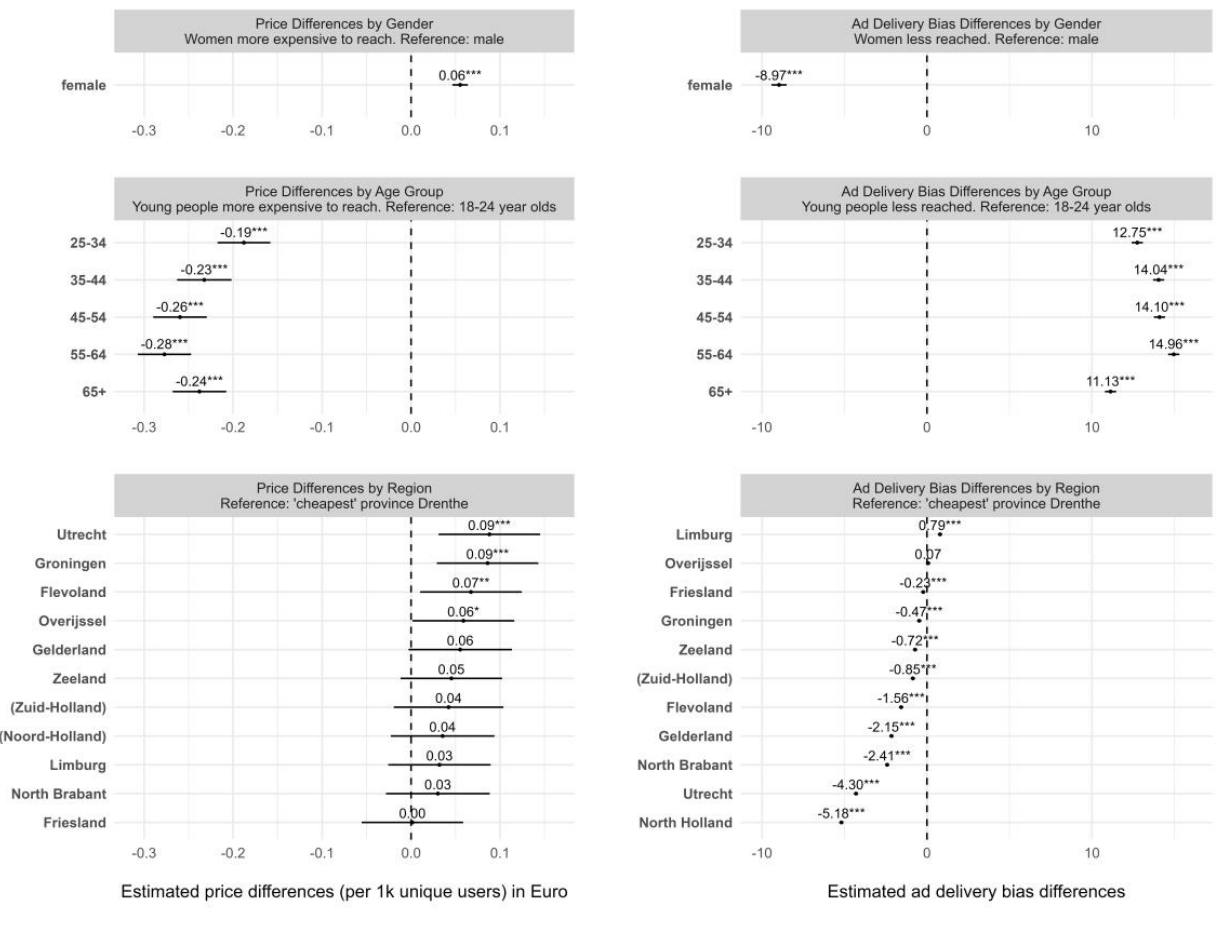 --- # Algorithms are a black box + It takes considerable effort to study them + they behave in ways that can be quite unexpected + yet with *algorithm audit study* we can start understanding their outcomes --- # Curious to learn more? I am currently in the process of building on this research by conducting a very similar design during the European Parliament elections + 10 countries + European Level + 16 parties confirmed + 18 parties still considering offer --- class: center, middle ## Thank you for your attention! Questions? Link to presentation: *favstats.github.io/algosoc-spring24* .pull-left[     ] .pull-right[     ] --- ## Literature Weber, M. S., & Kosterich, A. (2018). Coding the News: The role of computer code in filtering and distributing news. Digital Journalism, 6(3), 310–329. https://doi.org/10.1080/21670811.2017.1366865 --- ## Appendix --- class: white ## Four .fancy[Types] of Problematic Behavior .font50[(Bandy 2021)] .pull-left[ **1. Discrimination** disparate treatment based on race, age, gender, location, socio-economic status, or intersecting identities > Example: showing high-paying job ads primarily to men; facial recognition systems performing poorly on minority groups ] --- class: white ## Four .fancy[Types] of Problematic Behavior .pull-left[ **1. Discrimination** disparate treatment based on race, age, gender, location, socio-economic status, or intersecting identities > Example: showing high-paying job ads primarily to men; facial recognition systems performing poorly on minority groups **2. Distortion** Outcomes distort or obscure reality > Example: Search engines reinforcing stereotypes; filter bubbles ] -- .pull-right[ **3. Exploitation** Inappropriate use of (sensitive) personal information > Example: Inferring sensitive personal information without consent ] --- class: white ## Four .fancy[Types] of Problematic Behavior .pull-left[ **1. Discrimination** disparate treatment based on race, age, gender, location, socio-economic status, or intersecting identities > Example: showing high-paying job ads primarily to men; facial recognition systems performing poorly on minority groups **2. Distortion** Outcomes distort or obscure reality > Example: Search engines reinforcing stereotypes; filter bubbles ] .pull-right[ **3. Exploitation** Inappropriate use of (sensitive) personal information > Example: Inferring sensitive personal information without consent **4. Misjudgment** The algorithm makes incorrect predictions or classifications. > Example: Algorithms incorrectly categorizing users' employment status or interests; content moderation errors ] <!-- ### IV. Data Donation --> <!-- <img src="img/download.jpg" width="60%"> --> <!-- --- --> <!-- ### IV. Data Donation --> <!-- .pull-left[ --> <!-- `\(\color{green}{\text{Upsides}}\)` --> <!-- + non-public data (e.g., private messages, web browsing history) --> <!-- + Study (historical) records of users --> <!-- + over time --> <!-- + Completeness of data (e.g. when using Google Takeout) --> <!-- ] --> <!-- .pull-right[ --> <!-- `\(\color{red}{\text{Downsides}}\)` --> <!-- + Biased samples --> <!-- + who is more likely to give up data? --> <!-- + Very privacy-sensitive data might need to be collected --> <!-- + how to ensure privacy? --> <!-- + reproducibility? --> <!-- + data is often less structured or documented --> <!-- ] --> <!-- --- --> <!-- ### Online Political Microtargeting of Political Ads - the "bad actors"-story --> <!-- .pull-left[ --> <!-- <img src="img/cambridge_analytica.png" width="100%"> --> <!-- ] --> <!-- --- --> <!-- class: center, middle, white --> <!-- <!--  --> --> <!-- <img src="img/plantuml00.png" width="80%"> --> <!-- --- --> <!-- class: center, middle, white --> <!-- <!-- 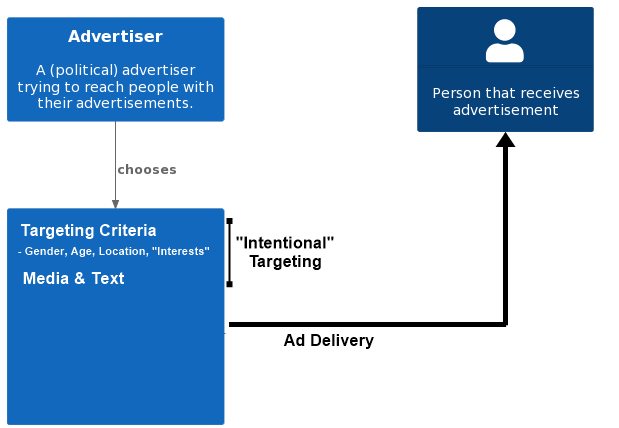 --> --> <!-- <img src="img/plantuml01.png" width="80%"> --> <!-- --- --> <!-- class: center, middle, white --> <!-- <!-- 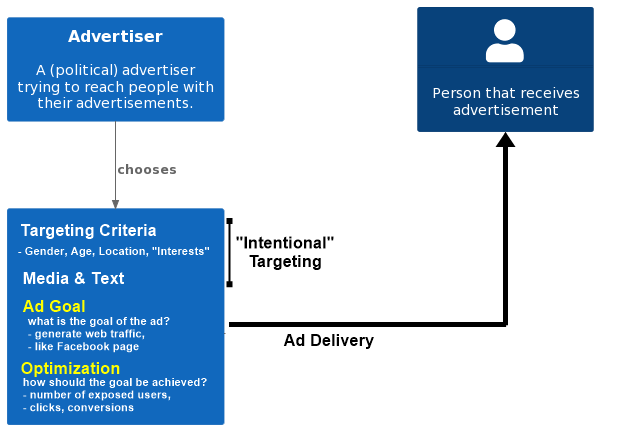 --> --> <!-- <img src="img/plantuml02.png" width="80%"> --> <!-- --- --> <!-- class: center, middle, white --> <!-- <!--  --> --> <!-- <img src="img/plantuml04.png" width="80%"> --> <!-- --- --> <!-- class: center, middle, white --> <!-- <!-- 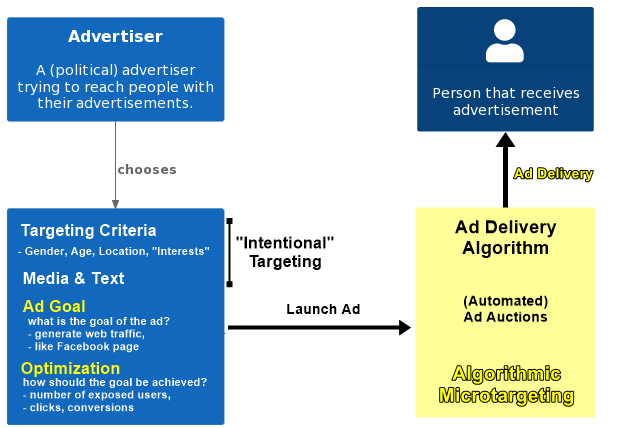 --> --> <!-- <img src="img/plantuml05.png" width="80%"> --> <!-- --- --> <!-- ### Who decides who sees which ad on Meta? --> <!-- + **Ad auctions** = an auction takes place that determines which ad by whom is shown --> <!-- <center> --> <!-- <img src="img/fb-ad-bidding.png" width="65%" height="65%"> --> <!-- </center> --> <!-- --- --> <!-- ### Who decides who sees which ad on Meta? --> <!-- + **Relevance** = how relevant is the ad to the user --> <!-- ```{r, out.width="70%", echo = F} --> <!-- knitr::include_graphics("img/relevant_quote.png") --> <!-- ``` --> <!-- [(Meta Business Help Center, 2022)](https://www.facebook.com/business/help/430291176997542) --> <!-- --- --> <!-- ### Who decides who sees which ad on Meta? --> <!-- + **Ad auctions** = an auction takes place that determines which ad by whom is shown: based on *budget* --> <!-- + **Relevance** = how relevant is the ad to the user --> <!-- <center> --> <!-- <img src="img/fb-ad-bidding2.png" width="65%" height="65%"> --> <!-- </center> --> <!-- -- --> <!-- ##### *Ad delivery algorithms* finding *relevant* audiences for ads: we term this **algorithmic microtargeting** --> <!-- --- --> <!-- class: center, middle --> <!-- ## Summary --> <!-- --- --> <!-- ### Summary --> <!-- Our findings do not always align with expectations. --> <!-- H1: More "relevant" audiences were not always cheaper --> <!-- H2: More "relevant" audiences were not always reached more --> <!-- H3: Party with greatest audience did not reach more or get cheaper prices --> <!-- -- --> <!-- **However:** --> <!-- > We **still** find that Meta ad delivery algorithm prioritizes certain parties and audiences for political advertising --> <!-- 1. PvdA pays least and reach most --> <!-- 2. Lower-educated, people interested in environment, women and younger people more expensive to reach --> <!-- --- --> <!-- ### Limitations --> <!-- + Only three political parties --> <!-- + Study first-of-its-kind --> <!-- + needs more research! --> <!-- + Relevance might need to be measured differently? --> <!-- + We do not vary content.. although studies suggest this is important (Ali et al. 2021, 2022) --> <!-- --- --> <!-- ### Implications --> <!-- + Unequal playing field --> <!-- + Meta (dis-)advantages certain parties --> <!-- + the findings presented in this paper show that political parties were not charged the same price for the same service --> <!-- -- --> <!-- + Potential for deepening political, social and geographical inequalities --> <!-- + Some groups of people and regions are **systematically** less likely to receive political advertisements and more expensive to reach --> <!-- + isolating these groups from receiving election-related information --> <!-- -- --> <!-- + Little to no transparency by Meta about these systematic biases --> <!-- + difficult to research and make visible instances of unequal treatment and price discrimination --> <!-- + highlighting importance of access to data --> <!-- -- --> <!-- + Simply "banning" microtargeting would be inadequate --> <!-- + more power to the black box algorithm --> <!-- --- --> <!-- class: center, middle, white --> <!-- # Zooming out --> <!-- Hopefully you found the methods, studies, and results in this talk interesting! --> <!-- Aaker, J. L. (1999). The Malleable Self: The Role of Self-Expression in Persuasion. Journal of Marketing Research, 36(1), 45–57. https://doi.org/10.1177/002224379903600104 --> <!-- Ali, M., Sapiezynski, P., Bogen, M., Korolova, A., Mislove, A., & Rieke, A. (2019). Discrimination through Optimization: How Facebook’s Ad Delivery Can Lead to Biased Outcomes. Proceedings of the ACM on Human-Computer Interaction, 3(CSCW), 1–30. https://doi.org/10.1145/3359301 --> <!-- Ali, M., Sapiezynski, P., Korolova, A., Mislove, A., & Rieke, A. (2021). Ad Delivery Algorithms: The Hidden Arbiters of Political Messaging. Proceedings of the 14th ACM International Conference on Web Search and Data Mining, 13–21. https://doi.org/10.1145/3437963.3441801 --> <!-- Dobber, T., Trilling, D., Helberger, N., & de Vreese, C. (2019). Spiraling downward: The reciprocal relation between attitude toward political behavioral targeting and privacy concerns. New Media & Society, 21(6), 1212–1231. https://doi.org/10.1177/1461444818813372 --> <!-- Dobber, T., Metoui, N., Trilling, D., Helberger, N., & de Vreese, C. (2020). Do (Microtargeted) Deepfakes Have Real Effects on Political Attitudes? The International Journal of Press/Politics, 26(1), 69–91. https://doi.org/10.1177/1940161220944364 --> <!-- Dobber, T., Trilling, D., Helberger, N., & de Vreese, C. (2023). Effects of an issue-based microtargeting campaign: A small-scale field experiment in a multi-party setting. The Information Society, 39(1), 35–44. https://doi.org/10.1080/01972243.2022.2134240 --> <!-- --- --> <!-- ## Literature --> <!-- Chan, C. H., Bajjalieh, J., Auvil, L., Wessler, H., Althaus, S., Welbers, K., ... & Jungblut, M. (2021). Four best practices for measuring news sentiment using ‘off-the-shelf’dictionaries: A large-scale p-hacking experiment. Computational Communication Research, 3(1), 1-27. --> <!-- Coppock, A., Hill, S. J., & Vavreck, L. (2020). The small effects of political advertising are small regardless of context, message, sender, or receiver: Evidence from 59 real-time randomized experiments. Science Advances, 6(36), eabc4046. https://doi.org/10.1126/sciadv.abc4046 --> <!-- Decker, H., & Krämer, N. (2023). Is Personality Key? Persuasive Effects of Prior Attitudes and Personality in Political Microtargeting. Media and Communication, 11(3), 250–261. https://doi.org/10.17645/ --> <!-- mac.v11i3.6627 --> <!-- Endres, K. (2020). Targeted Issue Messages and Voting Behavior. American Politics Research, 48(2), 317–328. https://doi.org/10.1177/1532673X19875694 --> <!-- Fiske, S. T. (1980). Attention and weight in person perception: The impact of negative and extreme behavior. Journal of Personality and Social Psychology, 38(6), 889–906. https://doi.org/10.1037/0022-3514.38.6.889 --> <!-- Freelon, D. (2018). Computational research in the post-API age. Political Communication, 35(4), 665-668. --> <!-- Garramone, G. M. (1984). Voter Responses to Negative Political Ads. Journalism Quarterly, 61(2), 250–259. https://doi.org/10.1177/107769908406100202 --> <!-- --- --> <!-- hi --> <!-- --- --> <!-- ## Literature --> <!-- Geer, J. G. (2006). In defense of negativity: Attack ads in presidential campaigns. University of Chicago Press. --> <!-- Haenschen, K. (2022). The Conditional Effects of Microtargeted Facebook Advertisements on Voter Turnout. Political Behavior, 1–21. https://doi.org/10.1007/s11109-022-09781-7 --> <!-- Hannun, A., Case, C., Casper, J., Catanzaro, B., Diamos, G., Elsen, E., Prenger, R., Satheesh, S., Sengupta, S., Coates, A., & Ng, A. Y. (2014). Deep Speech: Scaling up end-to-end speech recognition. arXiv:1412.5567 [cs]. Retrieved January 30, 2021, from http://arxiv.org/abs/1412.5567 --> <!-- Haselmayer, M. (2019). Negative campaigning and its consequences: A review and a look ahead. French Politics, 17(3), 355–372. https://doi.org/10.1057/s41253-019-00084-8 --> <!-- Hilbig, B. E. (2009). Sad, thus true: Negativity bias in judgments of truth. Journal of Experimental Social Psychology, 45(4), 983–986. https://doi.org/10.1016/j.jesp.2009.04.012 --> <!-- Krotzek, L. J. (2019). Inside the Voter’s Mind: The Effect of Psychometric Microtargeting on Feelings Toward and Propensity to Vote for a Candidate. International Journal of Communication; Vol 13 (2019). https://ijoc.org/index.php/ijoc/article/view/9605 --> <!-- Nai, A., & Maier, J. (2020). Is Negative Campaigning a Matter of Taste? Political Attacks, Incivility, and the Moderating Role of Individual Differences. American Politics Research, 49(3), 269–281. https://doi.org/10.1177/1532673X20965548 --> <!-- --- --> <!-- ## Literature --> <!-- Moon, Y. (2002). Personalization and Personality: Some Effects of Customizing Message Style Based on Consumer Personality. Journal of Consumer Psychology, 12(4), 313–325. https://doi.org/10.1016/S1057-7408(16)30083-3 --> <!-- Mutz, D. C., & Reeves, B. (2005). The New Videomalaise: Effects of Televised Incivility on Political Trust. American Political Science Review, 99(1), 1–15. https://doi.org/10.1017/S0003055405051452 --> <!-- Ohme, J., Araujo, T., Boeschoten, L., Freelon, D., Ram, N., Reeves, B. B., & Robinson, T. N. (2023). Digital Trace Data Collection for Social Media Effects Research: APIs, Data Donation, and (Screen) Tracking. Communication Methods and Measures, 1-18. --> <!-- Petty, R. E., and J. T. Cacioppo. 1986. The elaboration likelihood model of persuasion. Advances in Experimental Social Psychology 19:123–205. doi: 10.1016/S0065-2601(08)60214-2. --> <!-- Rozin, P., & Royzman, E. B. (2001). Negativity Bias, Negativity Dominance, and Contagion. Personality and Social Psychology Review, 5(4), 296–320. https://doi.org/10.1207/S15327957PSPR0504_2 --> <!-- Sharp, B., Danenberg, N., & Bellman, S. (2018). Psychological targeting. Proceedings of the National Academy of Sciences, 115(34), E7890–E7890. https://doi.org/10.1073/pnas.1810436115 --> <!-- Tanusondjaja, A., Michelon, A., Hartnett, N., & Stocchi, L. (2023). Reaching Voters on Social Media: Planning Political Advertising on Snapchat. International Journal of Market Research, 65(5), 566–580. https://doi.org/10.1177/14707853231175085 --> <!-- --- --> <!-- ## Literature --> <!-- Tappin, B. M., Wittenberg, C., Hewitt, L. B., Berinsky, A. J., & Rand, D. G. (2023). Quantifying the potential persuasive returns to political microtargeting. Proceedings of the National Academy of Sciences, 120(25), e2216261120. https://doi.org/10.1073/pnas.2216261120 --> <!-- Tufekci, Z. (2014). Engineering the public: Big data, surveillance and computational politics. First Monday. https://doi.org/10.5210/fm.v19i7.4901 --> <!-- Van Atteveldt, W., Van der Velden, M. A., & Boukes, M. (2021). The validity of sentiment analysis: Comparing manual annotation, crowd-coding, dictionary approaches, and machine learning algorithms. Communication Methods and Measures, 15(2), 121-140. --> <!-- Walter, A. S., & van der Eijk, C. (2019). Unintended consequences of negative campaigning: Backlash and second-preference boost effects in a multi-party context. The British Journal of Politics and International Relations, 21(3), 612–629. https://doi.org/10.1177/1369148119842038 --> <!-- Wheeler, S. C., DeMarree, K. G., & Petty, R. E. (2008). A match made in the laboratory: Persuasion and matches to primed traits and stereotypes. Journal of Experimental Social Psychology, 44(4), 1035–1047. https://doi.org/10.1016/j.jesp.2008.03.007 --> <!-- Zarouali, B., Dobber, T., De Pauw, G., & de Vreese, C. (2022). Using a Personality-Profiling Algorithm to Investigate Political Microtargeting: Assessing the Persuasion Effects of Personality-Tailored Ads on Social Media. Communication Research, 1066–1091. https://doi.org/10.1177/0093650220961965 --> <!-- --- --> <!-- class: center, middle --> <!-- ## Appendix --> <!-- --- --> <!-- class: center, white, middle --> <!-- ### Within-party differences --> <!-- Reach and cost **over time** --> <!-- -- --> <!-- Potential *market shock* on February 4th? --> <!-- --- --> <!-- class: white --> <!-- ### Within-party differences per day - Reach and Cost --> <!-- .pull-left[ --> <!-- ```{r} --> <!-- overview_day %>% --> <!-- drop_na(campaign_name) %>% --> <!-- mutate(targeting = fct_relevel(targeting, c("Economy", "Environment", "Politics", "Economy excluded", "Environment excluded", "Politics excluded", "Higher Education", "Lower Education", "No Targeting"))) %>% --> <!-- ggplot(aes(day, reach, color = targeting)) + --> <!-- geom_jitter() + --> <!-- geom_smooth() + --> <!-- facet_wrap(~targeting) + --> <!-- theme_minimal() + --> <!-- theme(legend.position = "none", --> <!-- plot.title = element_text(size = 19, face = "bold"), --> <!-- strip.text.y = element_blank(), --> <!-- strip.background = element_rect(fill = "lightgrey")) + --> <!-- ggtitle("Reach over time") --> <!-- ``` --> <!-- ] --> <!-- -- --> <!-- .pull-right[ --> <!-- ```{r} --> <!-- overview_day %>% --> <!-- drop_na(campaign_name) %>% --> <!-- mutate(engagement_rate = engagement/impressions*1000) %>% --> <!-- mutate(targeting = fct_relevel(targeting, c("Economy", "Environment", "Politics", "Economy excluded", "Environment excluded", "Politics excluded", "Higher Education", "Lower Education", "No Targeting"))) %>% --> <!-- ggplot(aes(day, cost_per_1_000_people_reached, color = targeting)) + --> <!-- geom_jitter() + --> <!-- geom_smooth() + --> <!-- facet_wrap(~targeting) + --> <!-- theme_minimal() + --> <!-- theme(legend.position = "none", --> <!-- plot.title = element_text(size = 19, face = "bold"), --> <!-- strip.text.y = element_blank(), --> <!-- strip.background = element_rect(fill = "lightgrey")) + --> <!-- ggtitle("Cost over time") --> <!-- ``` --> <!-- ] --> <!-- --- --> <!-- class: center, white, middle --> <!-- ### Within-party differences --> <!-- Reach and cost **over time** and **per party** --> <!-- `\(\rightarrow\)` party differences remain constant despite *"shock"* --> <!-- --- --> <!-- class: white --> <!-- ## Price differences per day --> <!-- .pull-left[ --> <!-- We observe: --> <!-- *Consistent results* --> <!-- + "Market shock" **hits all parties equally** --> <!-- + Environment audience consistently *more expensive* --> <!-- + Higher educated audience consistently *less expensive* --> <!-- *Inconsistent results* --> <!-- + Audiences interested in economy & politics are typically cheaper except on the day of the spike --> <!-- ] --> <!-- .pull-right[ --> <!-- ```{r, fig.height=6, fig.width=8} --> <!-- over_time_gg <- readRDS("../../phd/codebase/algo_ads/data/over_time_gg.rds") --> <!-- over_time_gg %>% --> <!-- ggplot(aes(day, Difference, shape = party)) + --> <!-- # geom_ribbon(aes(ymin = CI_low, ymax = CI_high), width = 0, position = position_dodge(width = 0.9)) + --> <!-- geom_errorbar(aes(ymin = CI_low, ymax = CI_high, color = party_color), width = 0, position = position_dodge(width = 0.9)) + --> <!-- # geom_line(aes(color = party_color)) + --> <!-- geom_point(aes(color = party_color), position = position_dodge(width = 0.9)) + --> <!-- # pammtools::geom_stepribbon(aes(ymin = CI_low, ymax = CI_high, fill = party_color), alpha = 0.1) + --> <!-- # geom_text(aes(label = diff_label, y = Difference , x = c(0.8, 1.05, 1.4)), position = position_dodge(width = 0.9), show.legend = F) + --> <!-- # coord_flip() + --> <!-- # geom_text(aes(label = diff_label), nudge_x = 0.1) + --> <!-- geom_hline(yintercept = 0, linetype = "dashed") + --> <!-- labs(y = "Estimated price differences of reaching 1k users in Euro", --> <!-- x = "Estimates per day") + --> <!-- theme_minimal() + --> <!-- scale_x_continuous(breaks = 1:7, --> <!-- labels = paste0("Day ", 1:7), minor_breaks = NULL) + --> <!-- scale_color_manual(values = c("#0066ee", "#e3101c", "#80c31c", "black")) + --> <!-- scale_shape_manual(name = "Party", values = c(16, 15, 17), labels = c("PvdA", "GroenLinks", "VVD")) + --> <!-- # scale_color_parties() + --> <!-- # facet_grid(condition_comparison ~ party) + --> <!-- # scale_alpha_discrete(range = c(0.25, 1)) + --> <!-- facet_wrap(~condition_comparison, ncol = 2) + --> <!-- theme(legend.position = "bottom", --> <!-- # strip.text.y = element_blank(), --> <!-- strip.background = element_rect(fill = "lightgrey")) + --> <!-- guides(color = "none") + --> <!-- ggtitle("Price differences per day") --> <!-- ``` --> <!-- ] --> <!-- <!-- --- --> --> <!-- <!-- ## Summary of within-party differences --> --> <!-- <!-- -- --> --> <!-- <!-- + Some audiences **systematically more expensive** and **receive less ads** than others --> --> <!-- <!-- + Lower Education, Environment interests --> --> <!-- <!-- + No targeting is cheapest, reaches most --> --> <!-- <!-- + Mostly **consistent for each party** --> --> <!-- <!-- + Suspected *"market shock"* on February 4th affects results --> --> <!-- <!-- + Some evidence that politics and economy audiences might be cheaper were it not for the spike --> --> <!-- --- --> <!-- class: white --> <!-- ### Price differences per day --> <!-- <center> --> <!-- <img src="img/days_breakdown_fin.png" width="50%" height="50%"> --> <!-- </center> --> <!-- --- --> <!-- class: white --> <!-- ### Bulk Discount? --> <!-- ```{r} --> <!-- report_data <- readRDS("../../phd/codebase/algo_ads/data/report_data.rds") --> <!-- ``` --> <!-- .pull-left[ --> <!-- ```{r} --> <!-- report_data %>% #count(page_name, sort = T) %>% --> <!-- filter(page_name %in% c("GroenLinks", "VVD", "Partij van de Arbeid (PvdA)")) %>% --> <!-- mutate(party = case_when( --> <!-- str_detect(page_name, "PvdA") ~ "PvdA", --> <!-- T ~ page_name --> <!-- )) %>% --> <!-- filter(day <= as.Date("2022-02-09")) %>% --> <!-- # filter(day >= as.Date("2022-01-29")) %>% --> <!-- # filter(disclaimer %in% c("GroenLinks", "Partij van de Arbeid (PvdA)", "VVD")) %>% --> <!-- # filter(disclaimer == "PvdA") --> <!-- # count(disclaimer, sort = T) --> <!-- mutate(spent = readr::parse_number(amount_spent_eur)) %>% --> <!-- # filter(spent != 100) %>% --> <!-- ggplot(aes(day, spent, fill = party)) + --> <!-- geom_col(position = position_dodge()) + --> <!-- scale_fill_parties() + --> <!-- theme_minimal() + --> <!-- theme(legend.position = "top") --> <!-- # geom_smooth(se = F)# + --> <!-- # scale_y_log10() --> <!-- ``` --> <!-- ] --> <!-- .pull-right[ --> <!-- ```{r} --> <!-- report_data %>% --> <!-- filter(page_name %in% c("GroenLinks", "VVD", "Partij van de Arbeid (PvdA)")) %>% --> <!-- mutate(party = case_when( --> <!-- str_detect(page_name, "PvdA") ~ "PvdA", --> <!-- T ~ page_name --> <!-- )) %>% --> <!-- filter(day <= as.Date("2022-02-09")) %>% --> <!-- # filter(day >= as.Date("2022-01-29")) %>% --> <!-- # filter(disclaimer %in% c("GroenLinks", "Partij van de Arbeid (PvdA)", "VVD")) %>% --> <!-- # filter(disclaimer == "PvdA") --> <!-- # count(disclaimer, sort = T) --> <!-- mutate(spent = readr::parse_number(amount_spent_eur)) %>% --> <!-- # filter(spent != 100) %>% --> <!-- ggplot(aes(day, number_of_ads_in_library, fill = party)) + --> <!-- geom_col(position = position_dodge()) + --> <!-- scale_fill_parties() + --> <!-- theme_minimal() + --> <!-- theme(legend.position = "top") --> <!-- ``` --> <!-- ] --> <!-- --- --> <!-- class: white, middle center --> <!-- ## Skewed delivery --> <!-- in terms of gender, age and region --> <!-- --- --> <!-- class: white --> <!-- ## Differences in delivery by gender --> <!-- .pull-left[ --> <!-- + *Line at zero* shows empirical equilibrium of target audiences (i.e. the observed share of men and women in target audience) --> <!-- + *Deviation from zero* are algorithmic biases --> <!-- + above zero: prioritization --> <!-- + below zero: de-prioritization --> <!-- + Ads *deliver to more men* for every party --> <!-- + However: bias towards men seems smaller for GroenLinks --> <!-- ] --> <!-- .pull-right[ --> <!-- ```{r} --> <!-- gender_dat <- readRDS("../../phd/codebase/algo_ads/data/gender.rds") %>% --> <!-- filter(gender != "unknown") --> <!-- gender_audience <- readRDS("../../phd/codebase/algo_ads/data/audience_joined_gender.rds") --> <!-- gender_audience %>% --> <!-- filter(gender != "unknown") %>% --> <!-- # filter(targeting == "No Targeting") %>% --> <!-- # drop_na(campaign_name) %>% --> <!-- ggplot(aes(gender, diff)) + --> <!-- geom_boxplot() + --> <!-- facet_wrap(~party) + --> <!-- ggpubr::stat_compare_means() + --> <!-- EnvStats::stat_mean_sd_text(digits = 0) + --> <!-- theme_minimal() + --> <!-- theme(strip.background = element_rect(fill = "lightgrey")) + --> <!-- labs(y = "Difference between audience share and delivery share") + --> <!-- ggtitle("Difference between audience share and delivery share") + --> <!-- geom_hline(yintercept = 0, linetype = "dashed") --> <!-- ``` --> <!-- ] --> <!-- --- --> <!-- class: white --> <!-- ## Differences in delivery by age group --> <!-- .pull-left[ --> <!-- + Ads *deliver less to young people* --> <!-- + aged 18-24 --> <!-- + Consistent for each party --> <!-- ] --> <!-- -- --> <!-- .pull-right[ --> <!-- ```{r} --> <!-- age_audience <- readRDS("../../phd/codebase/algo_ads/data/audience_joined_age.rds") --> <!-- age_audience %>% --> <!-- filter(age != "13-17") %>% --> <!-- filter(age != "unknown") %>% --> <!-- # filter(targeting == "No Targeting") %>% --> <!-- # drop_na(campaign_name) %>% --> <!-- ggplot(aes(age, diff)) + --> <!-- geom_boxplot() + --> <!-- facet_wrap(~party) + --> <!-- # ggpubr::stat_compare_means() + --> <!-- # EnvStats::stat_mean_sd_text(digits = 0) + --> <!-- theme_minimal() + --> <!-- theme(strip.background = element_rect(fill = "lightgrey")) + --> <!-- labs(y = "Difference between audience share and delivery share") + --> <!-- ggtitle("Difference between audience share and delivery share") + --> <!-- geom_hline(yintercept = 0, linetype = "dashed") + --> <!-- coord_flip() --> <!-- ``` --> <!-- ] --> <!-- --- --> <!-- class: white --> <!-- ## Region differences --> <!-- -- --> <!-- .pull-left[ --> <!-- + Ads deliver more to some regions --> <!-- + for example: Limburg, Friesland, Drenthe --> <!-- + Ads deliver less to other regions --> <!-- + Utrecht, North Holland, North Brabant --> <!-- + Consistent for each party --> <!-- ] --> <!-- -- --> <!-- .pull-right[ --> <!-- ```{r} --> <!-- region_audience <- readRDS("../../phd/codebase/algo_ads/data/audience_joined_region.rds") --> <!-- region_audience %>% --> <!-- filter(age != "13-17") %>% --> <!-- filter(age != "unknown") %>% --> <!-- mutate(region = fct_reorder(region, diff)) %>% --> <!-- # filter(targeting == "No Targeting") %>% --> <!-- # drop_na(campaign_name) %>% --> <!-- ggplot(aes(region, diff)) + --> <!-- geom_boxplot() + --> <!-- facet_wrap(~party) + --> <!-- # ggpubr::stat_compare_means() + --> <!-- # EnvStats::stat_mean_sd_text(digits = 0) + --> <!-- theme_minimal() + --> <!-- theme(strip.background = element_rect(fill = "lightgrey")) + --> <!-- labs(y = "Difference between audience share and delivery share") + --> <!-- ggtitle("Difference between audience share and delivery share") + --> <!-- geom_hline(yintercept = 0, linetype = "dashed") + --> <!-- coord_flip() --> <!-- ``` --> <!-- ] --> <!-- --- --> <!-- class: white --> <!-- #### Between-party differences --> <!-- .font80[If we exclude economic interests/target environmental interests: VVD reaches less people and cheaper than GL] --> <!-- .pull-left[ --> <!-- ```{r} --> <!-- mod_nobreak_h1cg <- lm(reach ~ targeting * party + engagement, data = overview) --> <!-- library(modelbased) --> <!-- contrasts_nobreak_h1cg <- estimate_contrasts(mod_nobreak_h1cg, contrast = c("targeting", "party"), --> <!-- at = c("targeting", "party")) %>% --> <!-- as.data.frame() %>% --> <!-- mutate(Contrast = paste(Level1, "-", Level2)) %>% --> <!-- mutate(condition_comparison = fct_reorder(Contrast, Difference)) --> <!-- ww <- contrasts_nobreak_h1cg %>% --> <!-- filter(str_detect(condition_comparison, "excluded")) %>% --> <!-- filter(str_count(condition_comparison, "Economy excluded") == 2) %>% --> <!-- mutate(party = str_extract(Level1, "VVD|GroenLinks|PvdA")) %>% --> <!-- filter(str_detect(Level2, "GroenLinks")) %>% --> <!-- bind_rows(contrasts_nobreak_h1cg %>% --> <!-- filter(!str_detect(condition_comparison, "excluded")) %>% --> <!-- filter(str_count(condition_comparison, "Environment") == 2) %>% --> <!-- mutate(party = str_extract(Level1, "VVD|GroenLinks|PvdA")) %>% --> <!-- filter(str_detect(Level2, "GroenLinks"))) %>% --> <!-- # bind_rows(contrasts_nobreak_h1cg %>% --> <!-- # filter(!str_detect(condition_comparison, "excluded")) %>% --> <!-- # filter(str_count(condition_comparison, "Economy") == 2) %>% --> <!-- # mutate(party = str_extract(Level1, "VVD|GroenLinks|PvdA")) %>% --> <!-- # filter(str_detect(Level2, "GroenLinks"))) %>% --> <!-- # bind_rows(contrasts_nobreak_h1cg %>% --> <!-- # filter(!str_detect(condition_comparison, "excluded")) %>% --> <!-- # filter(str_count(condition_comparison, "Politics") == 2) %>% --> <!-- # mutate(party = str_extract(Level1, "VVD|GroenLinks|PvdA")) %>% --> <!-- # filter(str_detect(Level2, "GroenLinks"))) %>% --> <!-- # in case the comparison is in wrong direction, change around --> <!-- # mutate_at(vars(Difference, CI_low, CI_high), ~ifelse(str_detect(condition_comparison, "excluded"), .x*-1, .x)) %>% --> <!-- # mutate_at(vars(Difference, CI_low, CI_high), ~ifelse(str_count(condition_comparison, "VVD")==2, .x*-1, .x)) %>% --> <!-- # mutate_at(vars(Difference, CI_low, CI_high), ~ifelse(str_detect(Level1, "Low"), .x*-1, .x)) %>% --> <!-- mutate(condition_comparison = str_remove_all(condition_comparison, "VVD|GroenLinks|PvdA")) %>% --> <!-- mutate(plabel = get_plabs(p)) %>% --> <!-- mutate(diff_label = paste0(round(Difference, 2), plabel)) --> <!-- # count(condition_comparison) --> <!-- # mutate(condition_comparison = "Reach of audience interested in the Environment (compared to VVD and Environment excluded)") %>% --> <!-- # mutate(condition_comparison = ifelse( --> <!-- # !str_detect(condition_comparison, "excluded"), --> <!-- # "Reach of audience interested in the Environment (compared to GroenLinks)", --> <!-- # "Reach of audience interested in the Environment (compared to Environment excluded)" --> <!-- # )) --> <!-- # -> ww --> <!-- ww %>% --> <!-- ggplot(aes("", Difference, color = party)) + --> <!-- geom_point(position = position_dodge(width = 0.9)) + --> <!-- geom_errorbar(aes(ymin = CI_low, ymax = CI_high), width = 0, position = position_dodge(width = 0.9)) + --> <!-- geom_text(aes(label = diff_label, x= 0 %>% magrittr::add(1.15), y = Difference), position = position_dodge(width = 0.9), show.legend = F) + --> <!-- coord_flip() + --> <!-- geom_hline(yintercept = 0, linetype = "dashed") + --> <!-- labs(y = "Estimated reach differences", --> <!-- x = "Targeting Comparisons") + --> <!-- theme_minimal() + --> <!-- scale_color_parties() + --> <!-- ggtitle("Reach (compared to GroenLinks)") + --> <!-- # facet_grid(condition_comparison ~ ., scales= "free_y" ) + --> <!-- facet_wrap(~condition_comparison, ncol = 2, scales= "free_y" ) + --> <!-- theme(legend.position = "bottom", --> <!-- strip.text.y = element_blank(), --> <!-- strip.background = element_rect(fill = "lightgrey")) --> <!-- ``` --> <!-- ] --> <!-- .pull-right[ --> <!-- ```{r} --> <!-- mod_nobreak_h1cg <- lm(cost_per_result ~ targeting * party + engagement, data = overview) --> <!-- ``` --> <!-- ```{r} --> <!-- library(modelbased) --> <!-- contrasts_nobreak_h1cg <- estimate_contrasts(mod_nobreak_h1cg, contrast = c("targeting", "party"), --> <!-- at = c("targeting", "party")) %>% --> <!-- as.data.frame() %>% --> <!-- mutate(Contrast = paste(Level1, "-", Level2)) %>% --> <!-- mutate(condition_comparison = fct_reorder(Contrast, Difference)) --> <!-- ww <- contrasts_nobreak_h1cg %>% --> <!-- filter(str_detect(condition_comparison, "excluded")) %>% --> <!-- filter(str_count(condition_comparison, "Economy excluded") == 2) %>% --> <!-- mutate(party = str_extract(Level1, "VVD|GroenLinks|PvdA")) %>% --> <!-- filter(str_detect(Level2, "GroenLinks")) %>% --> <!-- bind_rows(contrasts_nobreak_h1cg %>% --> <!-- filter(!str_detect(condition_comparison, "excluded")) %>% --> <!-- filter(str_count(condition_comparison, "Environment") == 2) %>% --> <!-- mutate(party = str_extract(Level1, "VVD|GroenLinks|PvdA")) %>% --> <!-- filter(str_detect(Level2, "GroenLinks"))) %>% --> <!-- # in case the comparison is in wrong direction, change around --> <!-- # mutate_at(vars(Difference, CI_low, CI_high), ~ifelse(str_detect(condition_comparison, "excluded"), .x*-1, .x)) %>% --> <!-- # mutate_at(vars(Difference, CI_low, CI_high), ~ifelse(str_count(condition_comparison, "VVD")==2, .x*-1, .x)) %>% --> <!-- # mutate_at(vars(Difference, CI_low, CI_high), ~ifelse(str_detect(Level1, "Low"), .x*-1, .x)) %>% --> <!-- mutate(condition_comparison = str_remove_all(condition_comparison, "VVD|GroenLinks|PvdA")) %>% --> <!-- mutate(plabel = get_plabs(p)) %>% --> <!-- mutate(diff_label = paste0(round(Difference, 2), plabel)) --> <!-- # count(condition_comparison) --> <!-- # mutate(condition_comparison = "Reach of audience interested in the Environment (compared to VVD and Environment excluded)") %>% --> <!-- # mutate(condition_comparison = ifelse( --> <!-- # !str_detect(condition_comparison, "excluded"), --> <!-- # "Reach of audience interested in the Environment (compared to GroenLinks)", --> <!-- # "Reach of audience interested in the Environment (compared to Environment excluded)" --> <!-- # )) --> <!-- # -> ww --> <!-- ww %>% --> <!-- ggplot(aes("", Difference, color = party)) + --> <!-- geom_point(position = position_dodge(width = 0.9)) + --> <!-- geom_errorbar(aes(ymin = CI_low, ymax = CI_high), width = 0, position = position_dodge(width = 0.9)) + --> <!-- geom_text(aes(label = diff_label, x= 0 %>% magrittr::add(1.15), y = Difference), position = position_dodge(width = 0.9), show.legend = F) + --> <!-- coord_flip() + --> <!-- geom_hline(yintercept = 0, linetype = "dashed") + --> <!-- labs(y = "Estimated cost differences", --> <!-- x = "Targeting Comparisons") + --> <!-- theme_minimal() + --> <!-- scale_color_parties() + --> <!-- ggtitle("Cost (compared to GroenLinks)") + --> <!-- # facet_grid(condition_comparison ~ ., scales= "free_y" ) + --> <!-- facet_wrap(~condition_comparison, ncol = 2, scales= "free_y" ) + --> <!-- theme(legend.position = "bottom", --> <!-- strip.text.y = element_blank(), --> <!-- strip.background = element_rect(fill = "lightgrey")) --> <!-- ``` --> <!-- ] -->